
about
Classic flamenco, Latin American guitar and original pieces. All in the repertoire of Andalusia-educated guitarist Afra Rubino. Trained by Spanish masters in her craft she presently operates from her native Gothenburg.
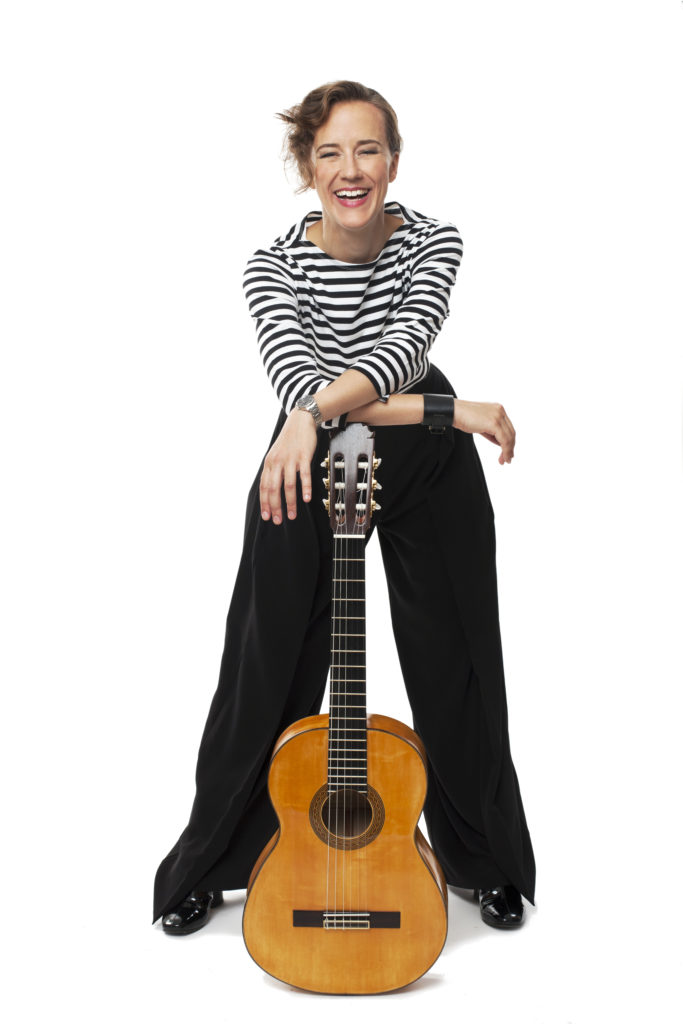
My artistic practice unfolds under the umbrella concept “Atlantic flamenco“. Through this framework, I explore what is often referred to as pre-flamenco and proto-flamenco — the musical currents that shaped flamenco before its canonization in the late nineteenth century. My work investigates the Afro-Andalusian heritage, the South American exchanges that emerged from Spain’s transatlantic trade routes, and earlier influences such as the Sephardic musical traditions that spread across the Mediterranean after the 16th century expulsions.
Rather than treating flamenco as a fixed genre, I approach it as a fluid, historically layered meeting point between continents, migrations, and identities. My aim is to illuminate the overlooked, hybrid, and transnational aspects of flamenco and to situate it within a broader Atlantic cultural memory.
Over the past years, this research-based artistic direction has taken shape in several long-term projects. In “The Double Bass Project“, initiated in 2017 together with double bass player Peter Janson, we weave together Spanish Baroque music, classical flamenco repertoire, original compositions, and improvisation. The project examines rhythmic and harmonic relationships between early Iberian music and flamenco, and also explores how flamenco aesthetics influenced composers such as Manuel de Falla.
Since 2022, I have developed “The Midnight Andalusians“, a project for string quartet and flamenco guitar, rooted in the historical concept of the Fandango — once a broad cultural phenomenon spanning social dance, popular song, and art music, far beyond its current stylized form in flamenco. This project embodies my ongoing effort to bridge archival research with contemporary chamber music contexts.
In 2020–21, I co-created the opera-flamenco performance “Carmen Recycled“, a re-interpretation of Bizet’s and Mérimée’s Carmen, where we challenged and “recycled” the original narrative’s destructive gender roles, transforming the story into one centered on autonomy and ownership of one’s history. This work reflects another core aspect of my artistry: addressing flamenco’s traditionally male-dominated structures while contributing to a broader redefinition of artistic authority within the genre.
Alongside my artistic productions, I am deeply engaged in developing the flamenco field in Sweden and Northern Europe. I co-run the Stockholm-based scene FlamencoFredag, where I work as programmer, musician, and web editor, creating a platform for Nordic and European flamenco artists. I tour internationally as a soloist and with FlamencoFredags houseband Tres De Corazones, perform at guitar and flamenco festivals across Europe, and contribute to educational activities that expand access to the genre.
Throughout my career, I have also been recognized as part of a new generation of female flamenco guitarists — including participation in the documentary Tocaoras, coverage in El País, collaborations with leading Spanish musicians, and the receipt of awards such as the STIM scholarship and the Guitar People’s Prize.